
Which plants actually thrive in Southland’s cold?
There’s a planting on a road I drive fairly often that somebody got right a good fifteen years ago and has barely touched since. Red tussock catching the low afternoon light. Dark, wiry shrubs holding the line behind it. A couple of trees that have finally earned their height. Nothing rare in there. Nothing that needed nursing. It just looks like it was always meant to be there.
That’s what most people down here are after. A planting that settles in, looks after itself, and gets better every year instead of needing a rescue mission every second winter.
Trouble is, most of us go looking for those plants by asking the wrong question first.
Is the cold actually the problem?
Not as often as the reputation suggests.
Southland’s reputation gets in the way here. Everyone assumes the thing that decides what lives is how cold it gets, so the search starts and finishes with frost hardiness. But our snap frosts seldom get past about -5°C. Enough to brown off soft new growth and put a lid of ice on the dog’s water bowl. Not enough to freeze the ground solid, and nowhere near enough to heave a plant out of the soil the way a proper continental winter does.
Three other things do the real sorting.
Wet ground. Down here the next rain usually turns up before the last lot has finished draining away, and heavy soil can hold that water for months on end. Roots sitting in cold water is what sees plants off over winter. The air temperature rarely gets the chance.
Steady wind. Not the once-a-year southerly that lifts a bit of spouting. The everyday sort that never lets new growth sit still long enough to thicken up.
A short, cool summer. Anything that needs a long hot run to ripen its season’s growth will always look like it stopped halfway through the job.
Sort those three out and the frost largely takes care of itself.
So which plants actually thrive here?
Six that do well down here, and where each one belongs.
Mingimingi (Coprosma propinqua): for the corner that never dries out

Most of the popular hedging natives want free-draining ground and rot if they don’t get it. Mingimingi is the opposite sort of customer. In the wild it grows along stream banks and through swampy ground, so a low, damp corner is home rather than a death sentence, and it takes frost, wind and salt on top of that.
Wiry, small-leaved, grey-green, dense once it’s away. Usually somewhere between 1 and 3m, taller in kinder spots. Not a showy plant. It’s the one you put where nothing else has worked.
Oioi (Apodasmia similis): the wet spot you’d rather look at
If you want the damp patch to be a feature instead of a problem, this is the one. A fine, upright, jointed rush that prefers wet or seasonally soggy ground, hardy to wind, frost and salt, and it turns a deeper bronze-green as the weather cools. Roughly 1 to 1.2m high and about a metre across, in a soft arching clump.
Plant it in a run rather than one at a time. [Spacing: around 50 to 60cm per most guidance – confirm what you’d recommend.]
Red tussock (Chionochloa rubra): the plant that already looks like it lives here
Drive through the Te Anau basin and the tussock is the landscape. Copper-brown and moving all the time, it does a job no clipped shrub can, and it handles damp, hungry ground without complaint.
One limit. It copes with seasonal wet, not with sitting in water all winter. Damp is fine. Permanently sodden is asking for trouble. On a heavy site, get it up on a slight mound and it’ll be away.
Mountain akeake (Olearia avicenniifolia): for the wind
Fast for a native, dense, upright, and built for exposure. It takes wind, dry ground and frost once it’s established, which is a rare combination in something that also grows quickly enough to be useful as shelter.
The catch is drainage: it wants free-draining soil, so this is a bank, ridge and shelterbelt plant, not a hollow-filler. Left to itself it can get to [8 to 10m tall and 4 to 5m wide], so give it room or keep it trimmed.
Mountain beech (Fuscospora cliffortioides): the long game
If you’re planting for the next generation rather than the next five years, beech is hard to beat. Mountain beech tolerates hard, hungry, poorly drained country in the high places, colours a bronzed tone through the cold months, and the frost is no bother to it.
Two things to plan for. It wants shelter from wind until it’s established, and it goes in best as a small plant rather than a big one. Cheap to establish, slow to reward.
Wineberry (Aristotelia serrata): the quick filler for damp margins
Deciduous, fast, and happy on damp forest-margin ground. In good conditions it can put on up to a metre a year in its early years, which makes it useful cover while the slower stuff comes through underneath.
The trade-off is that it’s frost-tender while it’s young and only hardy once it’s grown up. So give it a bit of shelter for the first couple of winters, particularly inland. On a coastal site it’ll romp away.
Why does the same plant thrive on one place and sulk on the next?
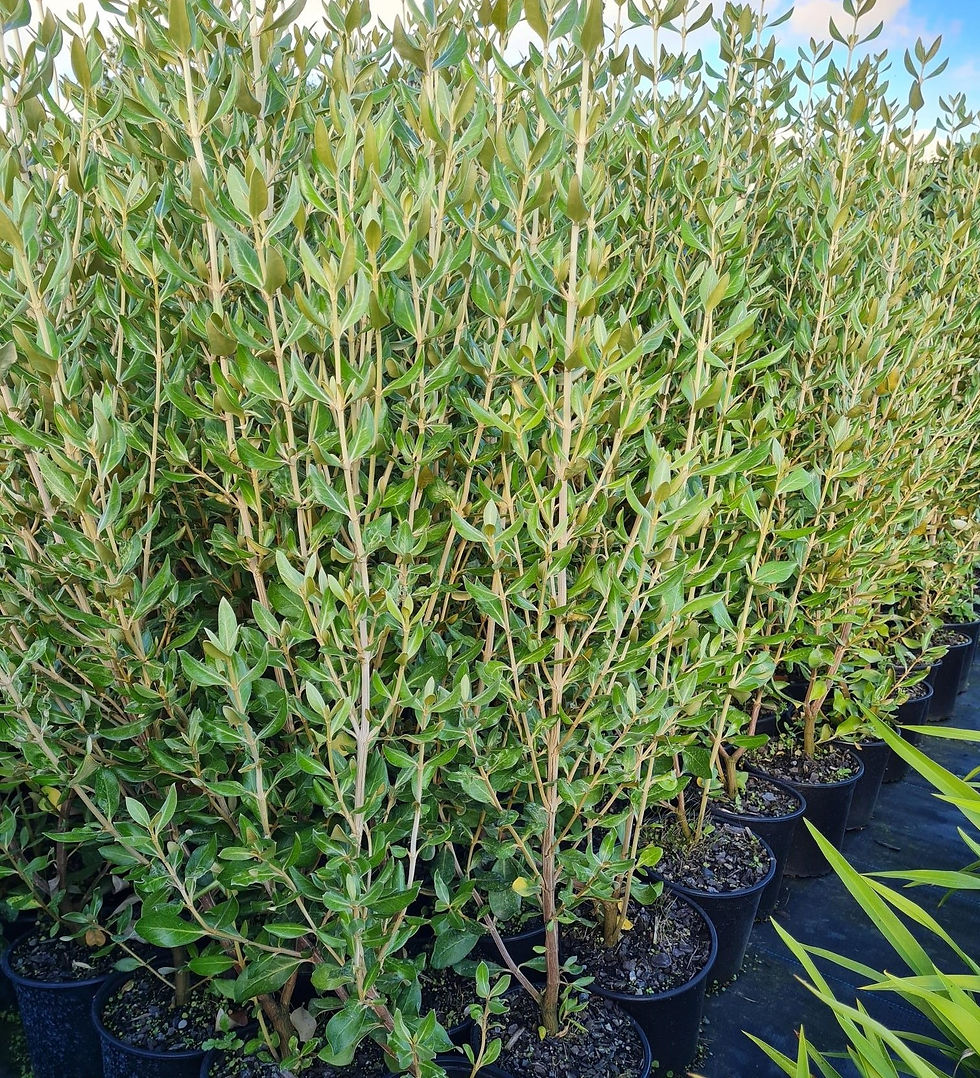
Because “Southland” covers a handful of different climates sitting side by side.
Down on the coast, around Invercargill and through the Catlins, things are milder and gentler than the reputation suggests. Head up into the higher inland country, Riversdale, Lumsden, Te Anau, and the frosts come harder and the growing season is shorter at both ends. Two properties an hour apart can be a fortnight apart.
Then there’s the ground itself, which varies more over one property than the climate does over a district. A free-draining bank and a flat clay hollow forty metres apart are two different gardens, and they want two different plant lists.
What if I’m not in Southland at all?
Then swap the problem, not the principle.
Most of the stock we send out goes north, and the two biggest markets have close to the opposite trouble. Central Otago runs hot and dry through summer and gets frosts a good deal harder and deeper than anything the Southland coast produces, so young plants there die of thirst as often as cold. Watering, mulch and properly dry-tolerant choices matter more than anything on the wet list above.
Canterbury has the nor’wester, which strips moisture out of new growth faster than the roots of a young plant can put it back. Shelter and a watering plan for the first two summers do more good there than any amount of frost rating.
Same principle either way. Work out what your site actually does to a plant, then pick for that.
Does Southland-raised stock actually make a difference?
It does. A plant grown in cold, wet ground down here spends its whole young life being toughened by the exact conditions it’ll meet later. The wood is harder, the growth is shorter and denser, and the roots have already had to cope with a cold winter. Send that same plant to Cromwell or Rangiora and it arrives with nothing to acclimatise to.
Stock raised soft under cover, then shipped south, has to learn all of that in its first season, usually while it’s also trying to establish. Some manage it. Enough don’t that I’d ask where your plants were grown before you order a few hundred.
Choose for the ground and the wind before you look at the frost rating, and the cold ends up being close to the least of your worries. Strange thing to say about this end of the country, but there it is.


Comments