
Shelterbelts That Actually Work: The Best Trees for Stock Shelter and Erosion on Southland Farms
- Travis Currie - Manager
- 6 days ago
- 3 min read
Picture the paddock in fifteen years. A wall of green cutting the worst of a southerly before it ever reaches the stock. Lambs dropped in the lee of it instead of out in the open, ewes not burning reserves just staying warm. The gully behind the shed holding its bank instead of losing another metre to the creek every winter.
That's what a shelterbelt's for. Half the ones going into the ground in Southland this winter won't get there.
Why do so many shelterbelts fail before they get going?
Wrong species for the site, mostly. Or planted too thin, or in a line that does nothing for the wind that actually hits the place.
A shelterbelt isn't a hedge. It's infrastructure — like a fence with no wire strung between the posts, a belt in the wrong direction is just an expensive line of trees. Get the species and the layout wrong and you've tied up a strip of paddock for a decade for not much return.
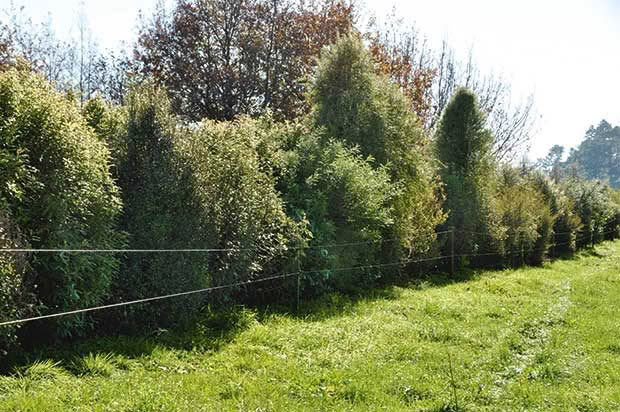
What actually stops Southland wind?
Density does the work, not height. A single row of anything, however tall, still lets wind funnel underneath and either side. You want a mix of heights and a fair bit of thickness through the belt — something tall doing the heavy lifting up top, something dense filling in low down where stock actually feel it.
In my experience, a poplar-only belt looks the part for the first five years and then lets you down the one winter you actually need it.
Eucalyptus and poplars: still the workhorses
For speed and sheer wind-stopping bulk, Eucalyptus and poplars are hard to go past on Southland farms. They're fast, they're proven, and they hold a bank as well as they cut wind — which matters if you're planting along a waterway that's slowly losing ground.
Where do natives fit in?
Alongside the Blue gums and poplars, not instead of them. An evergreen native understory — manuka, coprosma, some of the tougher broadleaf on the free-draining ground — keeps the belt doing its job in July when the poplars are bare sticks.
Manuka in particular earns its keep here: fast for a native, genuinely frost-hardy, and it doesn't mind the wind that would flatten something softer.
How do you actually lay one out?
Plant across the prevailing wind, not along it. A belt running the wrong direction won't do the job you planted it for. In Southland that mostly means planting to break the westerly and the south-westerly — check which way your place actually copes worst before you order a single plant.
Give it width. A single row will always disappoint; two or three staggered rows, spaced so the canopies eventually knit together, is what actually cuts wind speed on the leeward side.
Autumn's the best planting window down here — the ground's still warm, the air's cooling, and the first light frosts knock back the bugs that'd otherwise have a go at young growth. Winter planting, even mid-winter, is perfectly fine too — the ground stays moist and nothing's under pressure to push top growth it can't support yet. The one time to be careful is planting late into summer, when a plant with few roots can dry out before it's established.
What's the real cost?
If you’re planting 3 rows deep, you’ll be needing about 3 plants per lineal meter. Using reveg-grade plants, with protectors, it’s about $6/plant +GST. Add planting on top of that, and you’re up to $11/plant. Multiple by 200m and you’re at about $6600. It's not a small outlay, and it needs to earn its keep — but so does every fence you've ever put in, and nobody questions those.
A shelterbelt planted right this winter is one your stock — and the bank behind the shed — will thank you for in a decade. Get the species, the layout and the timing right, and it's one job you only do once.



Comments